

REVIEW: “Primate”
Courtesy of Paramount Pictures
The horror genre has always had a soft spot for creature features – especially the “animals gone wild” variety. From the relentless menace of The Birds (1963) to the primal terror of Jaws (1975), from the eco-horror paranoia of Piranha (1978) to the blunt brutality of Grizzly (1976), these films tap into something visceral. Primate fits neatly into this lineage, owing an obvious debt to Cujo (1983) – even if it swaps out a rabid St. Bernard for an infected chimpanzee. The filmmakers clearly know what worked about those earlier films and lean into it, delivering a lean, vicious throwback that feels intentionally old-school in both spirit and execution.
The setup is straightforward. College student Lucy (Johnny Sequoyah) heads home to Hawaii for summer break with her best friend Kate (Victoria Wyant) and her frenemy Hannah (Jessica Alexander). They’re met by Lucy’s childhood crush, who also happens to be Kate’s brother, Nick (Benjamin Cheng), and are whisked off to Lucy’s family’s stunning cliffside mansion. Once there, Lucy happily reconnects with her deaf novelist father, Adam (Troy Kotsur), while cautiously navigating a frosty reunion with her younger sister Erin (Gia Hunter), who resents Lucy for leaving for college. As if the family dynamics weren’t already messy enough, the movie introduces one more key player: Ben, the family’s pet chimpanzee, whom Lucy’s late mother once studied as part of her work as a linguist.
Adam is thrilled to have both of his daughters back under the same roof and eager to enjoy family time, but a looming book tour pulls him away almost immediately. Leaving Lucy, Erin, Nick, and the others with free rein of the mansion. With no parents around, plans quickly shift from family bonding to partying—and possibly even inviting over a couple of random guys the girls flirted with on their flight from the mainland. Before leaving, though, Adam notices that Ben isn’t quite himself. He’s snappier, twitchier, and clearly on edge. The explanation seems harmless enough: Ben was bitten by a mongoose that wandered into his enclosure, and Adam asks his daughters to keep an eye on him until the local vet can come by to check him.
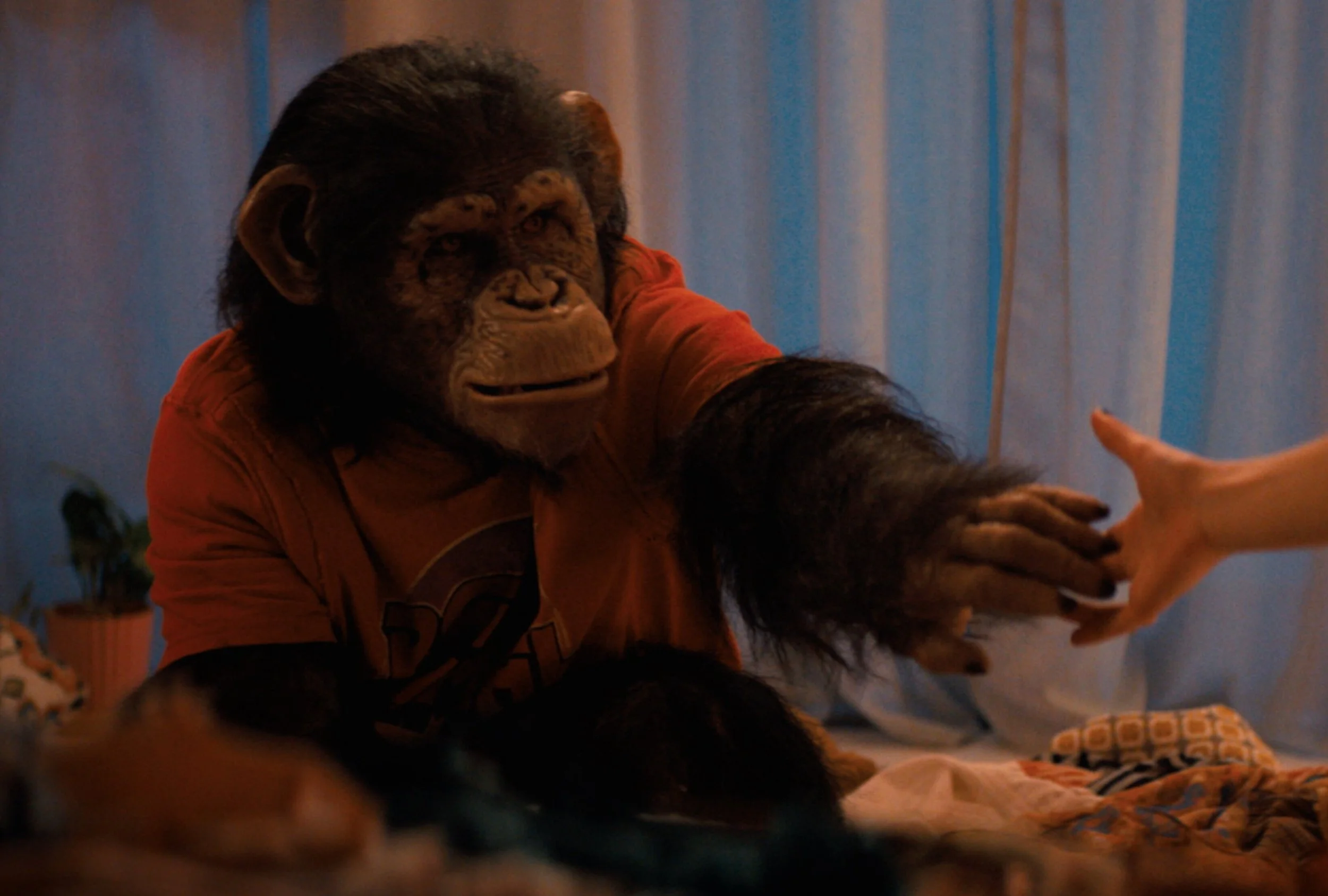
What no one realizes is that the mongoose was rabid and that the infection has begun to take hold. As the infection escalates, Ben’s demeanor shifts from slightly unsettling to actively menacing. One of the film’s most suspenseful scenes features the fully rabid chimp stalking the girls through the shadowy corridors of the mansion. The tension is palpable as the group tries to stay out of Ben’s grasp, forced to watch his erratic, feral outbursts turn their safe haven into a maze of terror. Brilliantly utilizing tight camera angles and sudden jolts of violence to shred viewers’ nerves, the sequence turns the girls’ dream summer vacation into a desperately frantic fight for survival.
On paper, and in execution, the premise is thin. That thinness becomes harder to ignore once you remember a couple of glaring real-world facts: rabies doesn’t exist in Hawaii, and privately owning a chimp there is highly illegal. But director Johannes Roberts (no stranger to creature chaos after directing the 47 Meters Down movies) and co-writer Ernest Riera clearly don’t care about those details. Facts and realism are tossed aside in favor of mayhem and carnage. Unfortunately, that single-minded focus leaves little room for any actual substance. The characters are walking archetypes: the hero, the best friend, the love interest, the nemesis. The clunky dialogue they deliver and the parade of staggeringly bad decisions they make don’t help them feel any more three-dimensional. It’s hard to care who lives or dies when most of the cast barely registers, with only Sequoyah and Kotsur managing to make much of an impression. It also doesn’t help that the film spends almost no time with Ben before the rabies kicks in, robbing his tragic transformation of any real emotional weight.
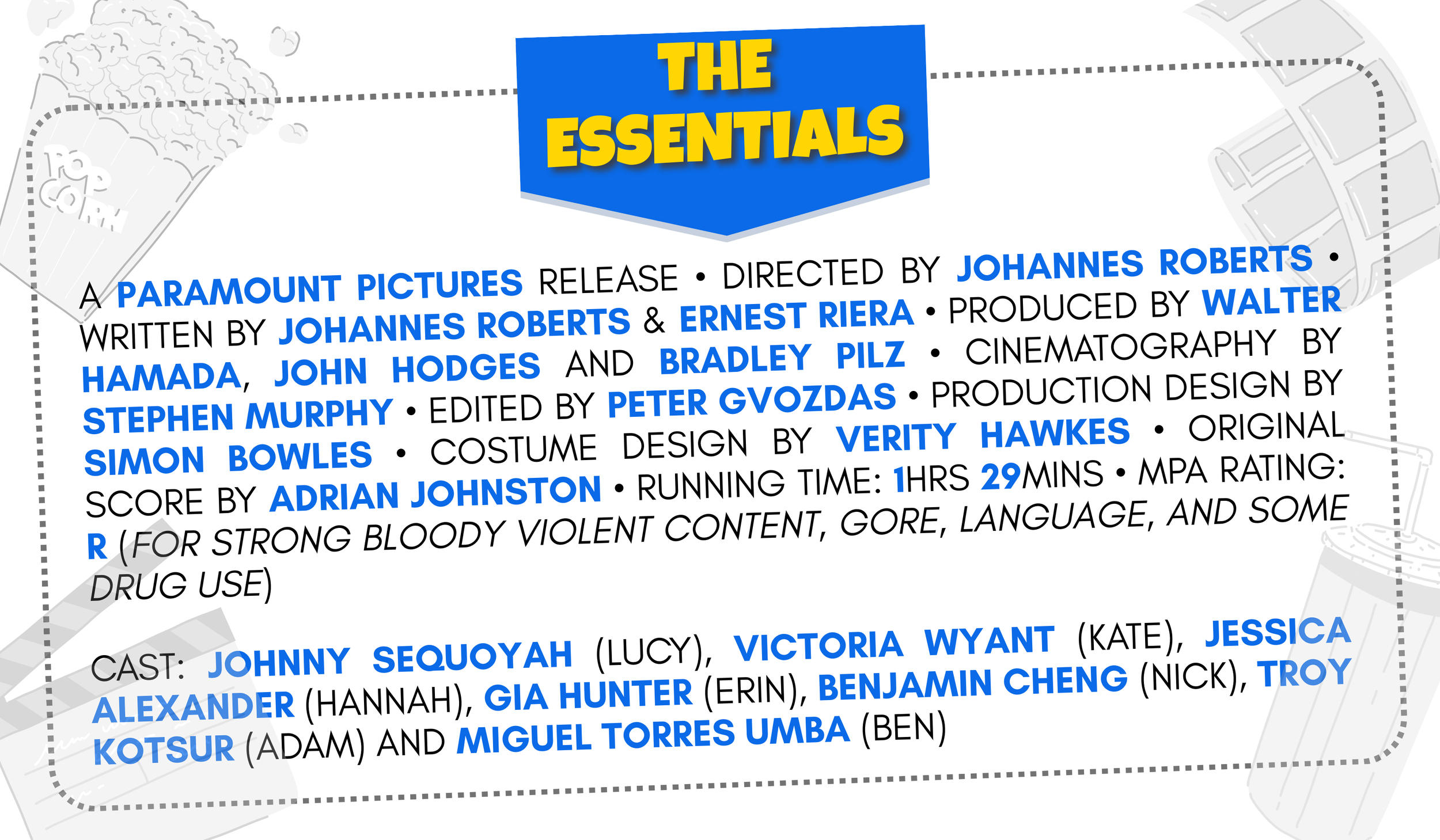
Where Primate really shines, however, is in how Ben is brought to life. Roberts wisely opts for an old-school approach, utilizing practical makeup effects and a full-body performance by creature performer Miguel Torres Umba, rather than relying on CGI. The result is a chimp with real physical weight and presence, which goes a long way toward selling him as a legitimate threat. The film clearly understands the limitations of its “man-in-a-suit” approach, staging many of Ben’s scenes in low light or near-total darkness to cleverly hide the seams. It’s a classic trick, and it’s mostly effective. Adding to the movie’s overall throwback vibe is Adrian Johnston’s synth-heavy score, which pulses with retro menace and feels cut from the same cloth as classic ‘80s horror scores, without feeling like a cheap imitation.
Ultimately, Primate works best if you’re willing to meet it on its own absurd terms. It’s thin on logic, light on genuine scares, and plays more like a slasher movie in disguise than a traditional creature feature. Still, the brisk pacing, effective old-school creature work, and a handful of satisfyingly gnarly kills keep things entertaining. It probably won’t linger in your nightmares or leave a lasting mark on the genre, but as a lean, bloody throwback that knows exactly what it is, Primate delivers just enough thrills to scratch that creature feature itch. Sometimes that’s all you need.

Primate is currently available to rent on VOD and/or available to stream on Paramount+.