

REVIEW: “The Brink Of War”
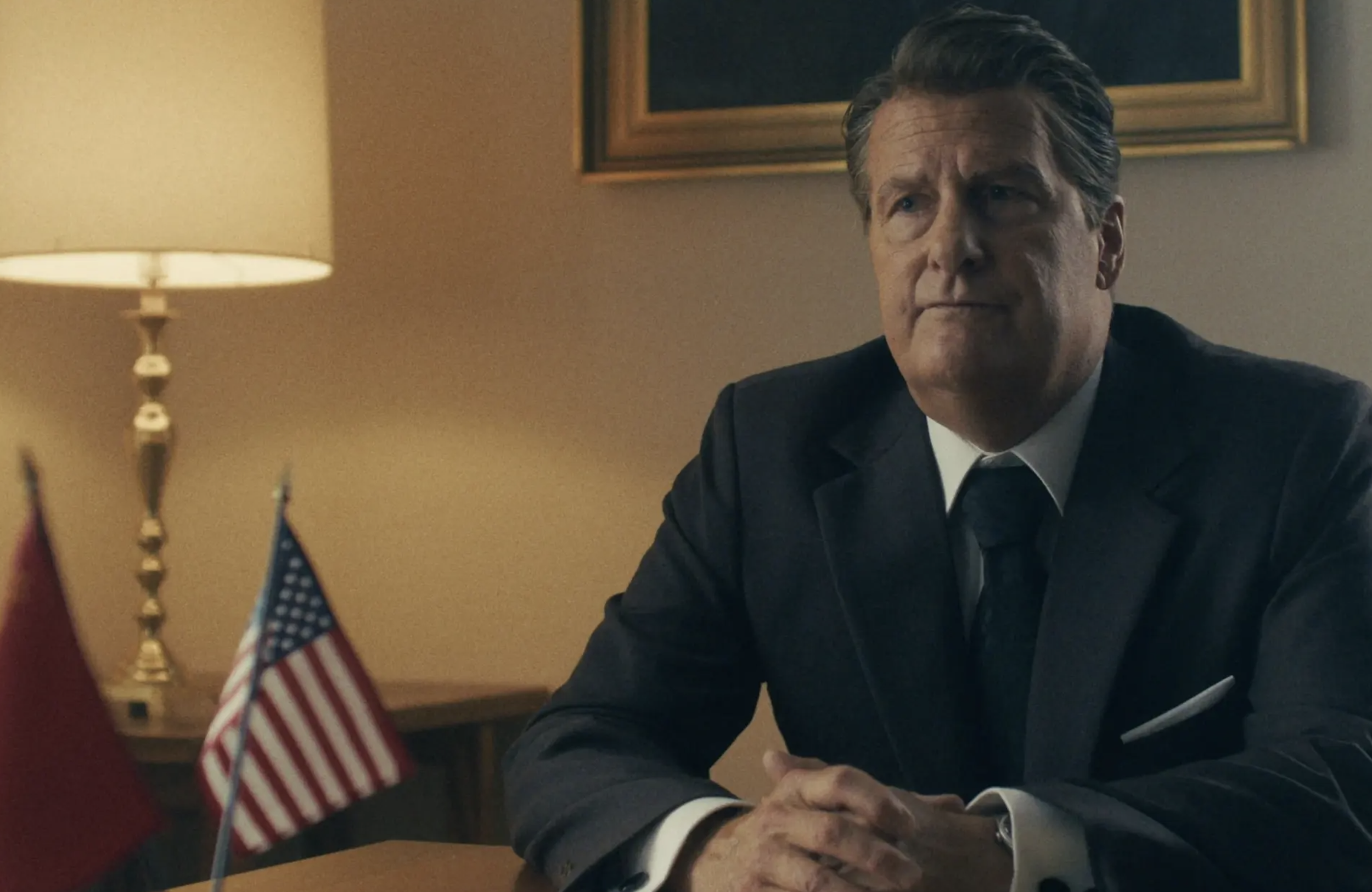
Courtesy of Angel Studios
Over the years, history has taught us that some of the most significant battles were fought without a single shot being fired. The Brink Of War reminds us of that, focusing on two powerful men sitting across a table from one another, engaged in conversations where the price of losing is literally nuclear annihilation. The movie is a serious, dialogue-driven political drama that might not always crackle with energy, but its strong ensemble cast makes the story more engaging than you might expect.
Set in 1986, right in the thick of the Cold War, the movie takes viewers inside the famous Reykjavík Summit in Iceland. President Ronald Reagan (Jeff Daniels) and Soviet leader Mikhail Gorbachev (Jared Harris) meet in person, both men facing enormous political pressure from their respective countries to discuss nuclear disarmament. Reagan is joined by Secretary of State George Schultz (J.K. Simmons), who acts as his adviser and sounding board during the tense talks.
There’s no getting around it: The Brink Of War is a talky movie. It’s built around the tense psychological chess match between Reagan and Gorbachev, where every word, refusal, or compromise could literally reshape the globe. On paper, watching two leaders discuss nuclear policy and human rights might not sound exciting, but director Michael Russell Gunn deserves much credit for turning what could have been a dry history lesson into a real movie experience.
He wisely avoids including action sequences, trusting that the conversations themselves provide all the tension the movie needs. The result is a slow-burn thriller that mostly takes place around a table in a small house in Iceland. While the house is rumored to be haunted, the real specter looming over the proceedings is the possibility of failure. The stakes are incredibly high, and the film does a great job showing the psychological toll the proceedings take on these men as they try to prevent disaster.
Gunn also wrote the script, using declassified summit transcripts and a personal interview with Schultz. He does a good job of showing both world leaders as real people. Rather than portraying them as symbols of democracy and communism, he shows them as two individuals attempting to solve a nearly impossible puzzle. It is genuinely interesting to watch these men, who hold wildly different ideologies, engage in serious, respectful debate, searching for common ground while recognizing their fundamental differences.
Despite seeming like an unusual choice for the role, Daniels is very good as Reagan, even if he's not a dead ringer for the former president. Wisely avoiding an impression or caricature, he manages to capture Reagan’s easygoing confidence, stubborn resolve, folksy charm, and political shrewdness. He uses just enough familiar vocal inflections and mannerisms to sell it. As good as Daniels is, Harris is just as impressive. He plays Gorbachev with a colder, steelier approach, showing intelligence but also giving the Soviet leader unexpected warmth and humanity. He turns a character who could easily have been a simple villain or antagonist into a complex, real human being.
The supporting cast is just as strong. Simmons is excellent as Schultz, bringing authority and urgency to what could have been a nothing role where his only purpose was to spout exposition. Hope Davis makes the most of her brief screen time as Nancy Reagan, capturing her deep understanding of her husband and the rapport that made their relationship work. Branka Katic is also very good as Raisa Gorbachev, and her scenes with Harris help show the real person behind the Soviet leader.
Unfortunately, the movie doesn't always trust its central drama. At almost two hours, it sometimes feels padded with scenes that add little to the overall story. The biggest example is a subplot involving two fictional journalists (Aya Cash and Guy Burnet) who follow Raisa on a publicity tour of Iceland. They spend a lot of time flirting, but their story goes nowhere. And since this subplot has no effect on the negotiations, it feels like it steals time away from the more interesting story. Gunn’s directorial debut is impressive, but a veteran director might have tightened the pacing and known exactly what material belonged on the cutting room floor.
Even with its flaws, The Brink of War achieves something truly unique: it makes a conversation feel incredibly dangerous. The movie shows that you don't need action scenes to keep audiences glued to the screen. Sometimes, the most exciting thing is watching two smart people trying to save the world, one careful word at a time.
The Brink Of War is currently available to rent on VOD.