

REVIEW: “28 Years Later: The Bone Temple”
Courtesy of Sony Pictures
More than any other genre, horror has a way of holding on, especially when it comes to its franchises. No matter how definitive an ending may seem, if audiences are still invested and the title still means something, another chapter usually isn’t far away. That’s especially true in today’s IP-driven landscape, where very few properties are ever truly finished. Even by those standards, the 28 Days Later franchise really kept fans waiting. After more than two decades of rumors, stalled development, and behind-the-scenes complications, 28 Years Later finally arrived in theaters last summer.
That film definitely had its admirers, with Danny Boyle returning to direct and Alex Garland back on writing duties after both sat out 2007’s 28 Weeks Later. It was ambitious and visually bold, but it was also wildly uneven, a movie that often felt like it was searching for its own focus. Now, barely six months later, 28 Years Later: The Bone Temple arrives with Nia DaCosta stepping behind the camera. Given the quick turnaround and the change in directors, a little skepticism is totally warranted. Thankfully, those worries are mostly unfounded. The Bone Temple is a noticeable step up from its predecessor, delivering something leaner, darker, and somewhat more satisfying.
Picking up immediately where 28 Years Later left off, the sequel follows Spike (Alfie Williams), the reluctant young hero of that movie, who now finds himself caught in the presence of Sir Lord Jimmy Crystal (Jack O’Connell), a deeply unhinged cult leader who believes the devil is literally his father. Jimmy commands a roaming group of followers who dress in tracksuits and blonde wigs (modeled after disgraced British media personality Jimmy Savile), each answering to some variation of the name Jimmy. It’s a setup that sounds strange and absolutely ridiculous on paper, but DaCosta wisely leans into the weirdness instead of trying to play it safe. The result is legitimately unsettling and strangely compelling.
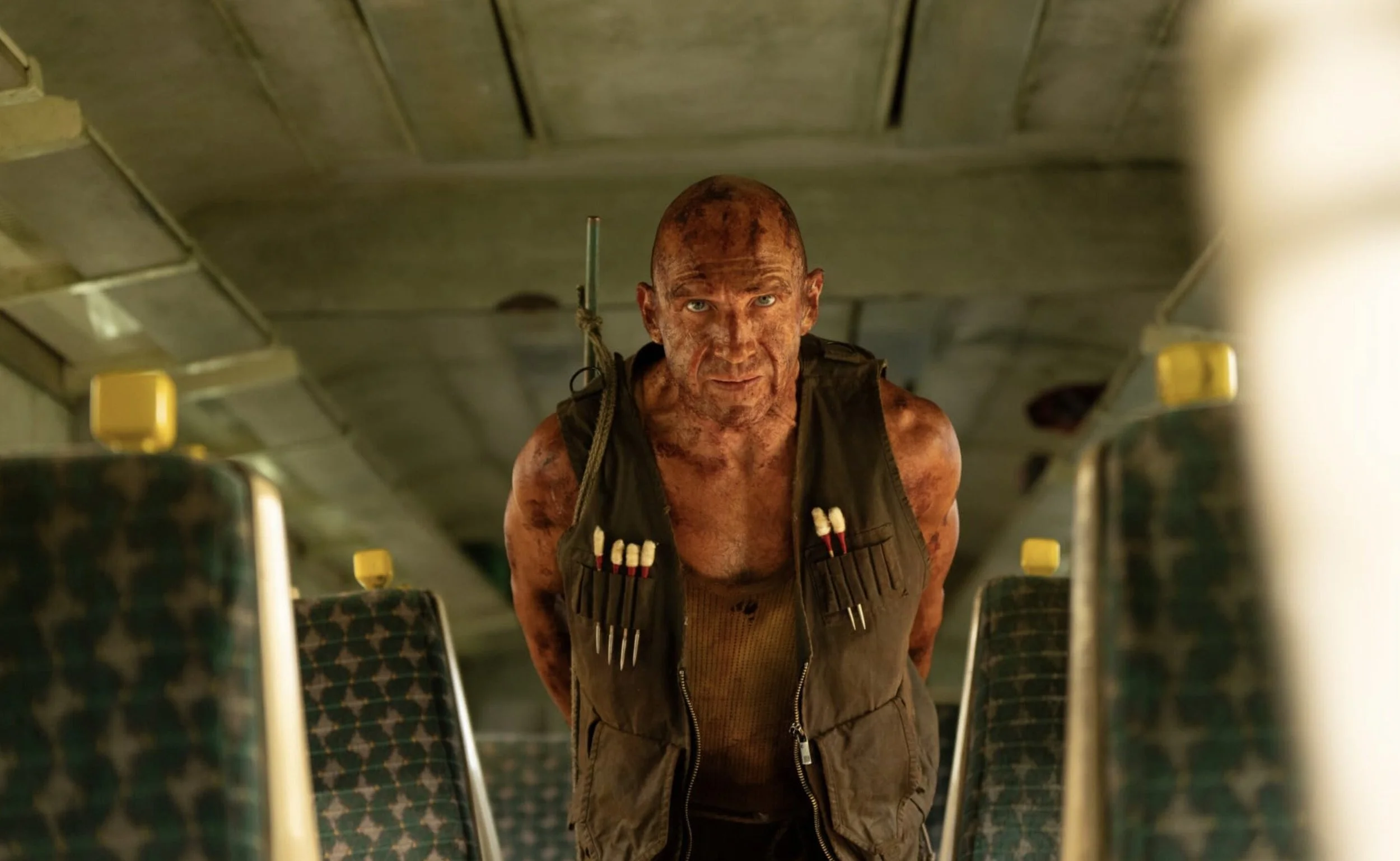
Still, the movie's real emotional core belongs to Dr. Kelson (Ralph Fiennes), who first appeared in the previous movie and remains the most intriguing character in this world. Living beneath the towering monument of bones that gives the movie its title. Kelson has devoted himself to a radical experiment. He’s attempting to rehabilitate an infected “Alpha,” a towering rage zombie he’s begun calling Samson (Chi Lewis-Parry). The relationship between the two provides the movie’s most fascinating moments. Their scenes are unsettling but also oddly tender. Fiennes brings such warmth and gravity to the role that it keeps the whole thing from drifting into camp. Whenever the film focuses on this storyline, it finds an eerie, almost hypnotic rhythm that works beautifully.
Frustratingly, though, The Bone Temple spends much of its runtime bouncing between Kelson’s meditative storyline and the far more chaotic Jimmy Crystal storyline, and the two tones don’t always fit comfortably together. The plotlines eventually collide when Jimmy and his followers stumble upon the bone temple. A misunderstanding leads Jimmy to believe that Kelson can help perform a ritual that will strengthen his followers’ devotion. And Kelson, recognizing that refusing probably means immediate death, reluctantly agrees to play along. What follows is easily the strangest and most audacious sequence in the entire movie, the kind of scene that could easily sink the movie in lesser hands. But Fiennes commits to the bit so completely that it becomes mesmerizing. Resulting in a scene that stands out as one of the most memorable moments in the entire franchise.
Like many middle chapters in a trilogy, The Bone Temple carries the burden of setting up what comes next, and some characters suffer for it. Spike, who was such a compelling presence in the previous movie, spends much of this one reacting to events rather than driving them. You can also occasionally feel the narrative machinery shifting pieces into position for the proposed third installment. Also, the infected themselves have been pushed to the margins of this story. In earlier movies, they were an omnipresent threat capable of turning any quiet moment into instant chaos. Here, aside from a few brief encounters, they largely fade into the background. The focus shifts toward the human antagonists, and while that change isn’t necessarily a bad thing, the absence of the infected is definitely noticeable.
Even with those issues, DaCosta handles the material with impressive confidence. Rather than simply mimicking Boyle’s iconic, hyperkinetic style, she builds on what made the earlier films work while still taking her own approach. Garland’s script also continues to wrestle with bigger ideas beneath the chaos, particularly the question of what it means to remain human after the world has collapsed.
28 Years Later: The Bone Temple isn’t flawless, and it may not completely satisfy fans who waited decades for this series to return. But it is a tense, frequently unsettling continuation that sharpens many of the ideas of the last movie while pushing the story into much stranger territory. If this new trilogy is building toward a massive grand finale, The Bone Temple makes a decent case that the journey will be worth taking.
28 Years Later: The Bone Temple is currently available to rent on VOD and/or available to stream on Netflix.