

REVIEW: “We Bury The Dead”
Courtesy of Vertical Entertainment
Zombie movies occupy a strange place in modern horror. What started as a subgenre full of sharp social commentary and clever scares has, over time, lost a lot of its bite. By now, moviegoers know the drill: a virus breaks out, the military shows up, and a ragtag group of survivors bands together to fend off the undead. Honestly, it’s hard for any of that to feel genuinely tense or even scary these days. Let’s face it: most modern zombie films just feel tired and toothless. That’s what makes We Bury The Dead such a refreshing surprise. It explores familiar territory but, instead of trying to reinvent the undead wheel, it sidesteps most of the usual tropes and clichés of the genre and aims for something deeper, quieter, and more human, a meditation on grief, memory, and hope.
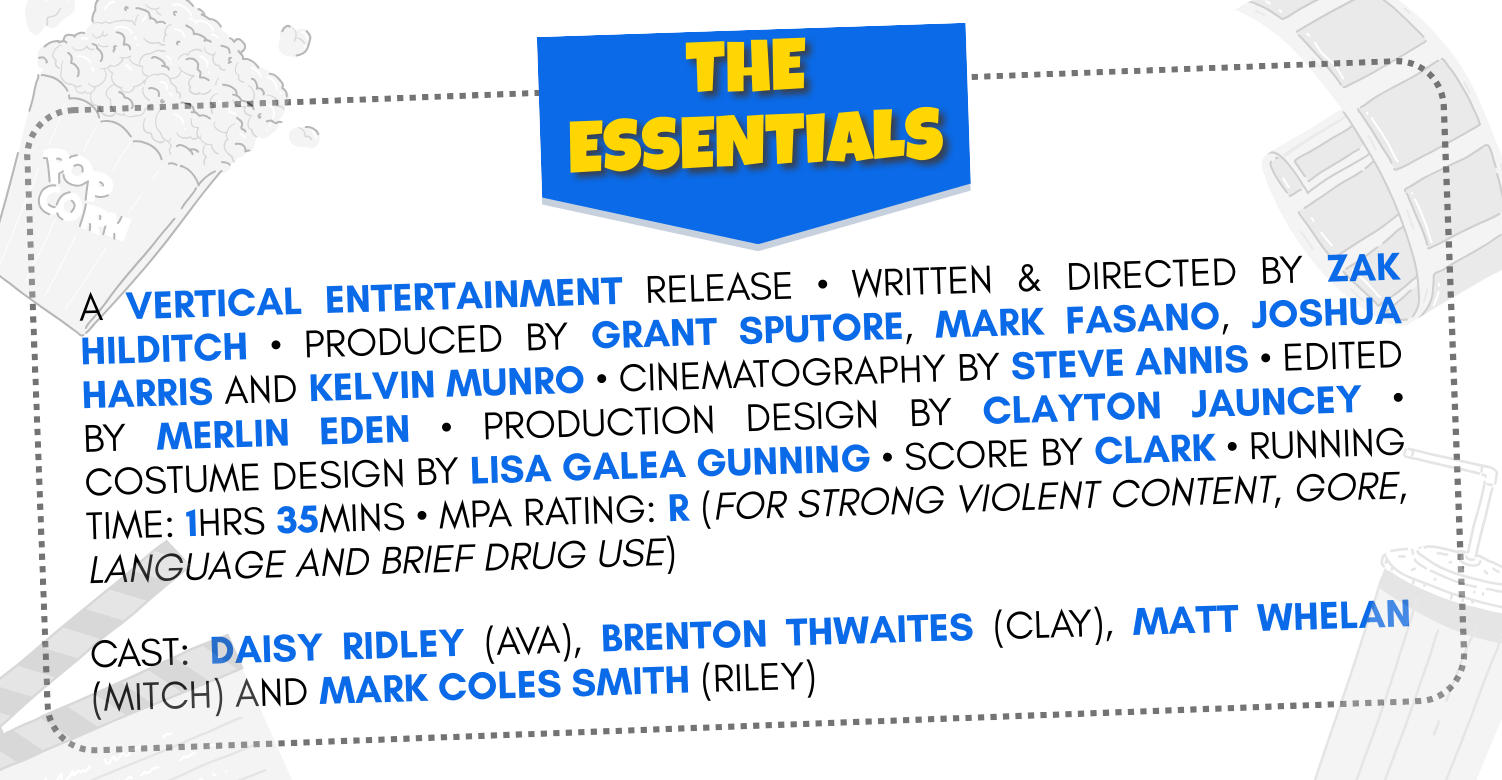
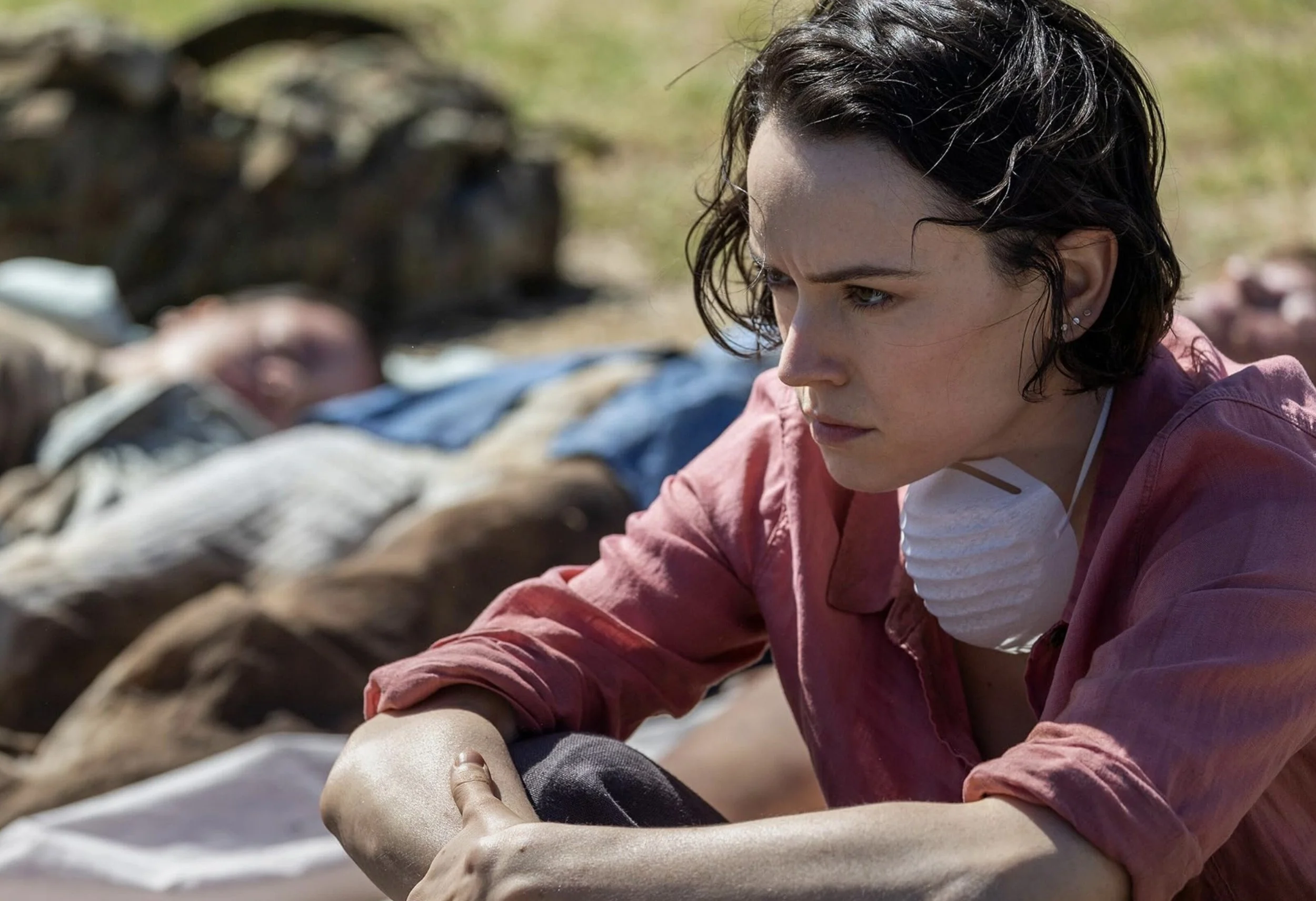
The movie follows Ava (Daisy Ridley), a young American who arrives in Tasmania after a catastrophic disaster. An experimental weapon, accidentally deployed by the U.S. military near the island, has wiped out much of the population and left the region largely abandoned. Ava is there for one reason: to find her husband, Mitch (Matt Whelan), who was attending a work retreat at a southern resort when everything went wrong. She volunteers for a military-run body retrieval unit in the quarantine zone, a grim assignment that involves identifying the dead, cataloging them, and disposing of them. There’s a catch, of course: some of the bodies don’t stay dead. Most return in a docile, almost confused state at first, but the longer they remain undead, the more unstable and violent they become. Making them a potential threat to Ava and her fellow volunteers. Fortunately, the military is standing by, ready to swoop in and protect if things get out of hand.
Ava has no intention of sticking with the unit for long. Despite repeated warnings that the southern part of the island is off-limits due to raging fires, she remains determined to make her way there, hoping to find whatever version of Mitch might still exist. While she waits for an opportune time to break away, she’s paired with Clay (Brenton Thwaites), a rough-edged local who’s looking to prove himself. When he learns about Ava’s plan, he agrees to help, taking her on a motorcycle into the island’s newly uncharted territory to help her find the closure she desperately needs. Writer-director Zak Hilditch creates a film that feels impressively expansive for an indie production, thanks to striking cinematography that makes the eerie stillness of the movie’s world feel epic. Abandoned highways, deserted buildings, and wide, desolate landscapes are shot with a muted, ghostly beauty. From the start, it’s clear that We Bury The Dead isn’t aiming for a full-throttle horror experience. This is a world that hasn’t exploded so much as quietly stopped, with Hilditch more interested in creepily getting under your skin than making you jump out of it – favoring dread over cheap shocks.
The film’s biggest strength is Ridley, who delivers her most restrained, grounded performance yet. She carries much of the movie with quiet intensity, showing Ava’s grief through exhaustion and long stretches of silence rather than over-the-top melodrama. She also has great chemistry with Thwaites, which helps their evolving bond add some heart to the story. Mark Coles Smith also impresses as a soldier grappling with his own grief and less-than-savory motives that the two encounter. His scenes, especially those with Ridley, flirt with the classic “fear the living more than the dead” trope but are central to the movie’s most chilling sequence. Another standout is the movie’s approach to its undead. They’re never called zombies, and they aren’t mindless brain-munching monsters. Instead, they largely return looking lost, sad, and confused, and seemingly still mostly human, making them strangely sympathetic to both the heroes and the audience. That said, Hilditch knows when to turn the creep factor up. One truly standout bit of creative genius: the undead jut their jaws and grind their teeth until they break, creating a genuinely bone-chilling chittering noise that lingers long after it’s heard.
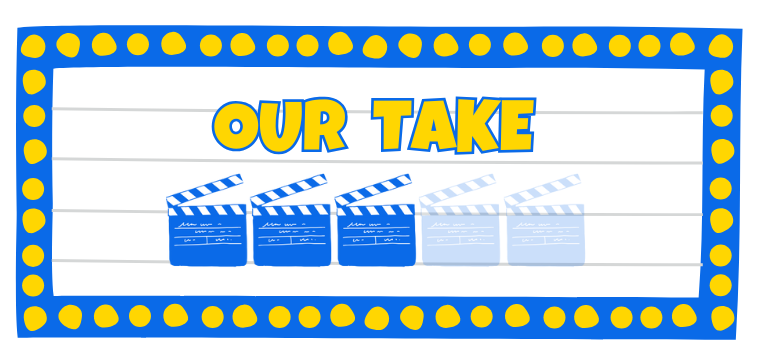
Where We Bury The Dead stumbles is in its pacing and loose storytelling. The deliberate slow burn suits the overall tone of the movie, but it may test viewers looking for something more visceral. Also, some supporting characters feel underdeveloped, and a few plot threads are left dangling, rather than being resolved. The film, unlike its main character, cares more about emotional resonance than closure, which is a strength, but one with limits. Ultimately, We Bury The Dead isn’t really about the undead. It’s about what the genre often sneaks in under the gore: how we process loss, cling to memory, and keep moving forward when the future feels uncertain. It’s a quiet, haunting movie that understands the hardest thing to survive isn’t a zombie apocalypse, but grief itself. And sometimes, that’s far more terrifying than any undead horde.
We Bury The Dead is currently playing in limited release.