

Courtesy of Focus Features
There’s a special kind of disappointment that hits when a movie takes a story worth telling and makes sitting through it feel like a chore. The Uprising tells the story of the Peasants’ Rebellion of 1381, a largely forgotten, bleak chapter in British history when everyday people finally drew a line in the dirt against a greedy ruling class. It’s rich and relevant subject matter. But Paul Greengrass turns what could have been an inspiring fight for dignity into a dismal slog that’s hard to stay interested in. The movie piles on cruelty, endless speeches echo across the muddy landscape, and the camera rarely settles down long enough for any of it to really sink in.
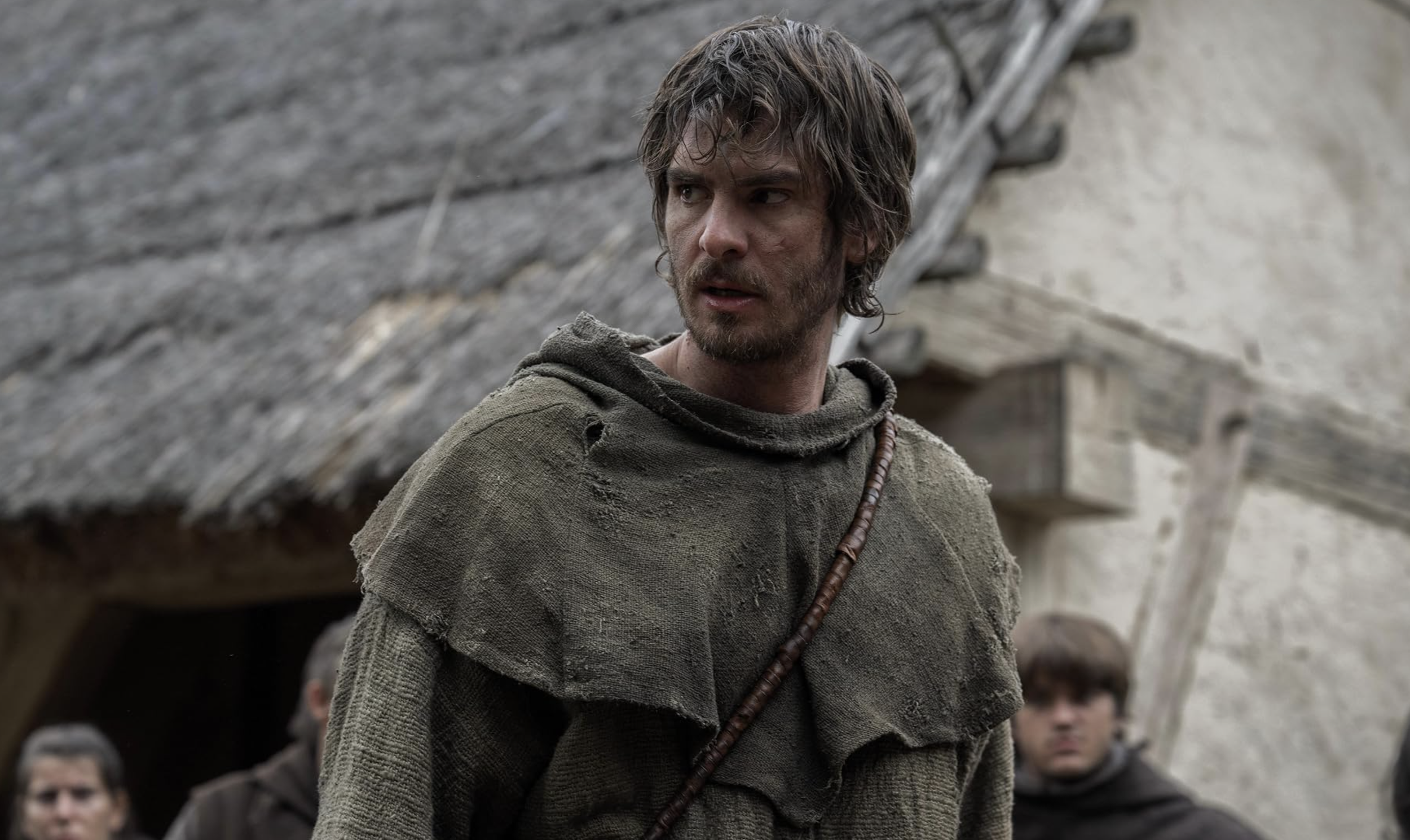
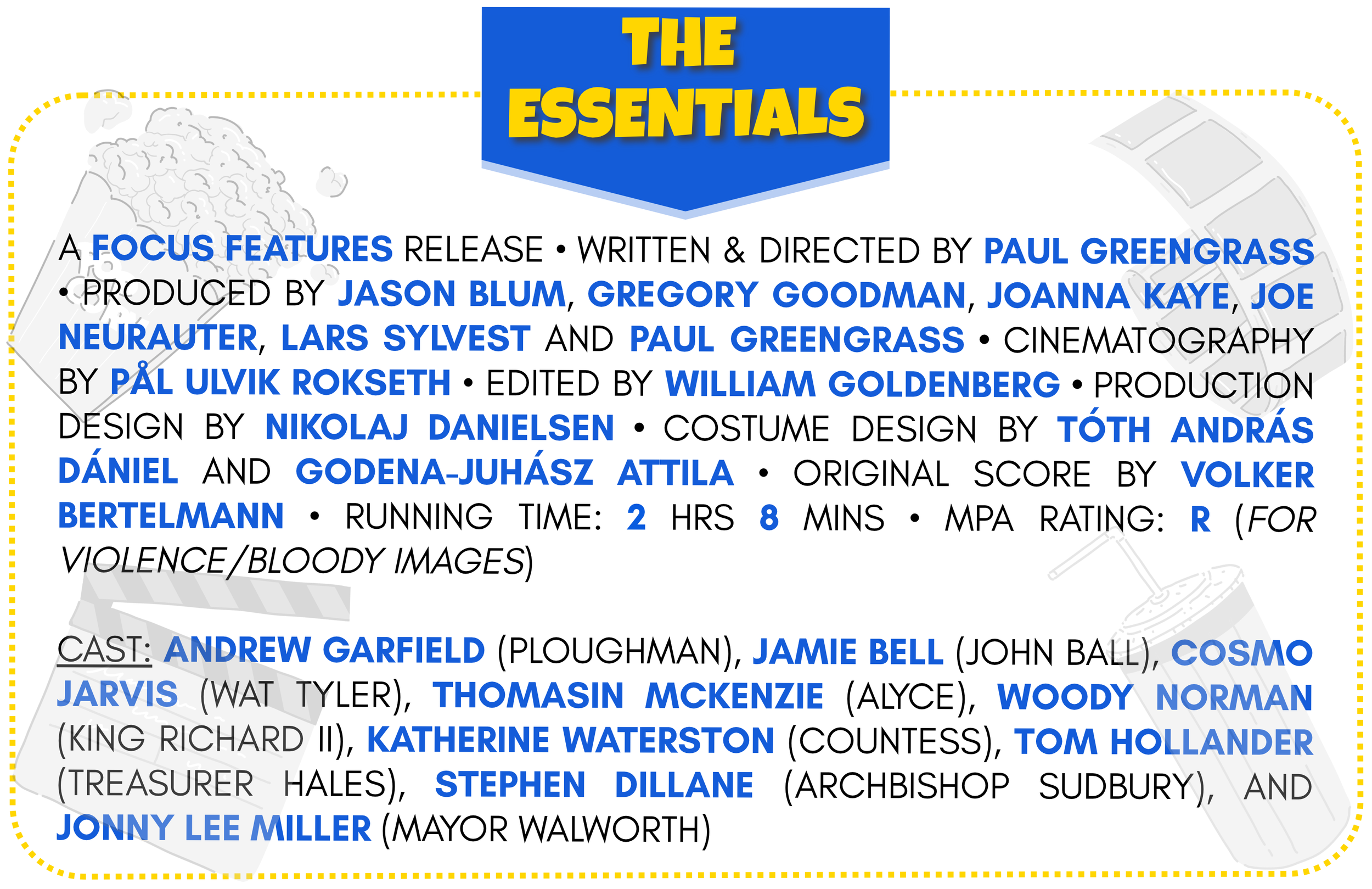
Set in medieval England, the movie follows an unnamed ploughman (Andrew Garfield) who has lost his whole family to the plague. Burdened by grief, he faces a crown and nobility determined to squeeze more money from his fellow peasants who barely have enough to get by. His defiance helps spark a movement, and he joins forces with real historical figures: the radical preacher John Ball (Jamie Bell) and rebel leader Wat Tyler (Cosmo Jarvis), as they march on King Richard II (Woody Norman).
The movie’s problems begin with a screenplay that mistakes a worthy cause for a compelling story. Yes, these people deserve justice, but that alone doesn’t make them interesting characters. What do they want beyond surviving and defeating their oppressors? What divides them? Why follow one leader over another? The movie leaves all of those questions hanging. The rebels become a blur of misery, while the powerful exist to remind us how truly awful they are. The movie makes that point within the first twenty minutes, then keeps hammering it home.
Garfield is stranded at the center of this mess. His ability to suggest hurt and inner conflict should make him an ideal guide through the uprising, but the role gives him little room to build an actual character. He’s weighed down by heavy grief and is fueled by anger and solemn resolve, but the performance has nowhere interesting to go. There’s a big difference between watching a man become a leader and watching a movie insist that he is one. Here, his journey feels forced instead of earned.
The supporting cast fares a little better. Bell brings real fire to John Ball, lending the preacher’s convictions some force even when the writing settles for speeches over character. Jarvis, on the other hand, is oddly flat as Wat Tyler, lacking the booming presence and energy needed to suggest why anyone would follow him. The contrast results in a lopsided rebellion: one man has conviction to spare, while the other barely seems to have a pulse. Meanwhile, Thomasin McKenzie is sadly wasted as Alyce, left to mostly stand around while the men take action. These characters should give the uprising a human face, but again the film doesn’t give these actors much to work with.
Greengrass’s trademark visual style makes matters worse. The shaky handheld camerawork and quick editing try to force an emotional reaction before the scenes even have time to breathe. Chaos can build real tension if you know where the characters are and what they’re fighting for, but here it becomes a barrier between the audience and the story. Even the calmer moments feel weighed down by the same heavy approach.

Because there’s no real human connection to hold onto, the movie leans way too hard into unrelenting brutality and violence instead. The cruelty proves the circumstances are bad, but then more cruelty arrives just to underline the point. After a while, the repetition leaves you numb to what’s happening on screen. A movie about people fighting for a better life needs to show why those lives matter. Without warmth or any real human bond, the non-stop misery becomes the movie’s whole identity and an incredibly exhausting one at that.
To make matters worse, the filmmakers make the misguided decision to clumsily marry historical facts with folklore at the end, trying to turn this somber affair into an origin story for Robin Hood. Blending history and legend can work, but it needs to feel natural. Here, it feels tacked on at the last minute, just to give all the suffering that’s unfolded a hopeful purpose. This sudden attempt at hope clashes with the rest of the movie, turning a real and painful historical struggle into another fictional character’s backstory. Not even Sherwood Forest can provide cover for storytelling this clumsy and awkward.
The Uprising wastes both great talent and fascinating history. It spends so much time telling us how important it is that it forgets to make us care, and its last-minute attempt at adventure only makes the emptiness harder to ignore. The peasants deserved freedom. The audience deserves a better movie.
The Uprising is currently in wide release.